industrydif.com
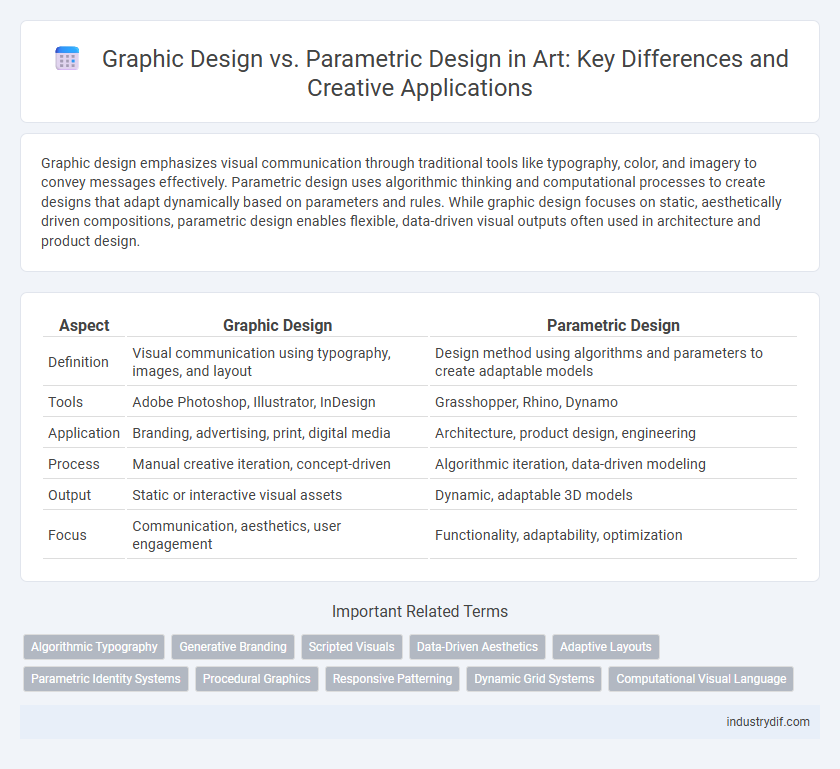
 Graphic design emphasizes visual communication through traditional tools like typography, color, and imagery to convey messages effectively. Parametric design uses algorithmic thinking and computational processes to create designs that adapt dynamically based on parameters and rules. While graphic design focuses on static, aesthetically driven compositions, parametric design enables flexible, data-driven visual outputs often used in architecture and product design.
Table of Comparison
| Aspect | Graphic Design | Parametric Design |
|---|---|---|
| Definition | Visual communication using typography, images, and layout | Design method using algorithms and parameters to create adaptable models |
| Tools | Adobe Photoshop, Illustrator, InDesign | Grasshopper, Rhino, Dynamo |
| Application | Branding, advertising, print, digital media | Architecture, product design, engineering |
| Process | Manual creative iteration, concept-driven | Algorithmic iteration, data-driven modeling |
| Output | Static or interactive visual assets | Dynamic, adaptable 3D models |
| Focus | Communication, aesthetics, user engagement | Functionality, adaptability, optimization |
Introduction to Graphic Design and Parametric Design
Graphic design centers on creating visual content to communicate messages through typography, imagery, and layout, often using software like Adobe Photoshop and Illustrator. Parametric design involves algorithm-based modeling where design parameters drive the creation of complex forms, commonly used in architecture and digital fabrication. Understanding both approaches enhances creativity and precision in crafting visually compelling and structurally innovative projects.
Core Principles of Graphic Design
Graphic design centers on principles such as balance, contrast, alignment, repetition, and hierarchy to create visually compelling and communicative layouts. It emphasizes deliberate use of color, typography, and imagery to convey a clear message and optimize user experience across print and digital media. Parametric design, in contrast, relies on algorithm-driven processes and variable parameters to generate dynamic forms and patterns, prioritizing adaptability and computational creativity over static visual elements.
Fundamentals of Parametric Design
Parametric design in graphic arts emphasizes algorithm-driven processes and variable parameters to create adaptable, complex visuals that evolve based on input data, contrasting traditional static methods in graphic design. Core fundamentals include the use of computational tools, mathematical models, and scripting languages such as Python or Grasshopper to generate dynamic graphics that respond to changes in design criteria. This approach enables designers to explore innovative forms, optimize efficiency, and customize outputs within visual communication projects.
Tools and Software Used in Both Disciplines
Graphic design relies heavily on tools like Adobe Photoshop, Illustrator, and InDesign for creating visually compelling layouts and illustrations through pixel-based and vector graphics. Parametric design utilizes advanced software such as Grasshopper, Rhino, and Autodesk Dynamo, enabling designers to develop dynamic, algorithm-driven models and structures with precise control over parameters. Both disciplines integrate digital technology but differ fundamentally in approach, where graphic design prioritizes aesthetic composition and parametric design emphasizes performance-driven, rule-based creation.
Creative Process: Intuitive vs Algorithmic Approaches
Graphic design relies heavily on an intuitive creative process where designers explore concepts through visual experimentation and emotional resonance. Parametric design employs algorithmic approaches, using computational rules and parameters to generate complex, adaptable forms systematically. These contrasting methodologies highlight the balance between human creativity and computational precision in contemporary art practices.
Visual Communication and User Experience
Graphic design emphasizes static visual communication through the strategic use of typography, color, and imagery to convey brand identity and messages effectively. Parametric design leverages algorithmic processes and dynamic variables to create adaptable, interactive visuals that enhance user experience by responding to user inputs and environmental data. Both disciplines prioritize clarity and engagement, but parametric design offers greater customization and real-time responsiveness in user-centered visual environments.
Flexibility and Adaptability in Design Outcomes
Graphic design emphasizes visual communication through static compositions, offering controlled and precise outcomes tailored to specific messages. Parametric design utilizes algorithms and dynamic variables, enabling highly flexible and adaptable structures that evolve in response to changing parameters. This computational approach allows designers to explore a wide range of design variations quickly, optimizing form and function in complex projects.
Industry Applications in Art, Architecture, and Media
Graphic design excels in creating visually compelling content for advertising, branding, and multimedia art, utilizing tools like Adobe Illustrator and Photoshop to produce static and dynamic visuals. Parametric design leverages algorithmic processes and software such as Grasshopper and Rhino to generate adaptive architectural forms and interactive media installations, enabling innovative structural and aesthetic solutions. In architecture and media, parametric design enhances customization and complexity, while graphic design maintains critical roles in communication, user experience, and visual storytelling.
Collaboration and Workflow Differences
Graphic design relies on static visual elements and manual adjustments, streamlining collaboration through conventional tools like Adobe Creative Suite and cloud-based file sharing. Parametric design incorporates algorithms and variable parameters, enabling dynamic iterations and requiring multidisciplinary teamwork with constant real-time feedback via software such as Grasshopper or Dynamo. Workflow in parametric design is more iterative and data-driven, fostering enhanced precision and adaptability compared to the linear and aesthetic-focused process of traditional graphic design.
Future Trends in Graphic and Parametric Design
Future trends in graphic design emphasize AI-driven creativity, immersive experiences, and sustainability, integrating generative algorithms to enhance visual storytelling and user engagement. Parametric design advances by leveraging computational power and data-driven processes, enabling adaptive, customizable, and dynamic forms in both digital and physical media. The convergence of graphic and parametric design fosters innovative workflows, combining aesthetics with algorithmic precision to meet evolving demands in arts and design industries.
Related Important Terms
Algorithmic Typography
Algorithmic typography in graphic design leverages computational algorithms to generate dynamic, customizable typefaces, enabling intricate and precise letterforms that adapt to various media. Parametric design extends this approach by using parameters to manipulate type structures systematically, fostering innovative, data-driven visual communication within digital and interactive art forms.
Generative Branding
Generative branding in graphic design leverages algorithmic processes to create dynamic, adaptable visual identities, enhancing brand consistency and customization. Parametric design applies mathematical parameters to develop flexible branding elements that evolve with user data, offering innovative solutions for personalized and scalable brand experiences.
Scripted Visuals
Scripted visuals in graphic design enable dynamic and customizable artwork by using code-based tools like Processing or p5.js, offering designers precise control over shapes, colors, and animations. Parametric design extends this concept by employing algorithms and parameters to generate complex, adaptive forms often used in architecture and 3D modeling, bridging visual creativity with computational precision.
Data-Driven Aesthetics
Graphic Design emphasizes visual communication through traditional tools and fixed layouts, relying heavily on designer intuition and manual adjustments, while Parametric Design harnesses algorithms and computational data inputs to generate dynamic, adaptable forms and patterns. Data-driven aesthetics in Parametric Design enable precise control over complex geometries and interactive visual elements, pushing creative boundaries beyond static graphic compositions.
Adaptive Layouts
Adaptive layouts in graphic design prioritize fixed grid structures to create visually consistent and responsive compositions, ensuring clarity across various screen sizes. Parametric design employs algorithm-driven rules that dynamically adjust layout elements, enabling more fluid and customizable adaptations for complex, data-driven visuals.
Parametric Identity Systems
Parametric Identity Systems utilize algorithm-driven design processes to create dynamic, adaptable visual identities that respond to varying parameters, enhancing brand consistency and flexibility. Unlike traditional Graphic Design, which often relies on fixed layouts, parametric approaches generate customizable, scalable graphics tailored to diverse media and audience interactions.
Procedural Graphics
Procedural graphics in graphic design leverage algorithmic techniques to create complex, dynamic visuals, contrasting with parametric design's focus on variable-driven forms defined by specific parameters. While graphic design often emphasizes static compositions, procedural graphics enable the generation of intricate patterns and textures through code, enhancing flexibility and creative control in digital art.
Responsive Patterning
Responsive patterning in graphic design relies on static grid systems and fixed visual elements to maintain coherence across various media, whereas parametric design uses algorithm-driven models that adapt patterns dynamically based on user interaction or environmental input. Parametric design enhances visual adaptability by integrating mathematical relationships and real-time data to create fluid, evolving patterns that respond to contextual changes more effectively than traditional graphic design methods.
Dynamic Grid Systems
Dynamic grid systems in graphic design prioritize adaptability and modularity, enabling designers to create visually consistent layouts that respond fluidly to various screen sizes and formats. Parametric design introduces algorithm-driven parameters that automate grid adjustments, enhancing precision and scalability while allowing for complex, data-informed visual compositions.
Computational Visual Language
Graphic design relies on traditional visual composition principles and manual tools, while parametric design leverages computational visual language to generate dynamic, data-driven forms and patterns. Parametric design enables designers to encode complex rules and relationships into algorithms, producing adaptable and intricate visuals unattainable through conventional graphic design methods.
Graphic Design vs Parametric Design Infographic