industrydif.com
 Building Information Modeling (BIM) provides a detailed digital representation of a construction project's physical and functional characteristics, facilitating collaboration and coordination among stakeholders. Generative Design uses algorithms to explore numerous design alternatives based on specified constraints and goals, optimizing layouts, materials, and structural efficiency. Combining BIM with Generative Design enhances project innovation by enabling data-driven decision-making and improving accuracy in planning and execution.
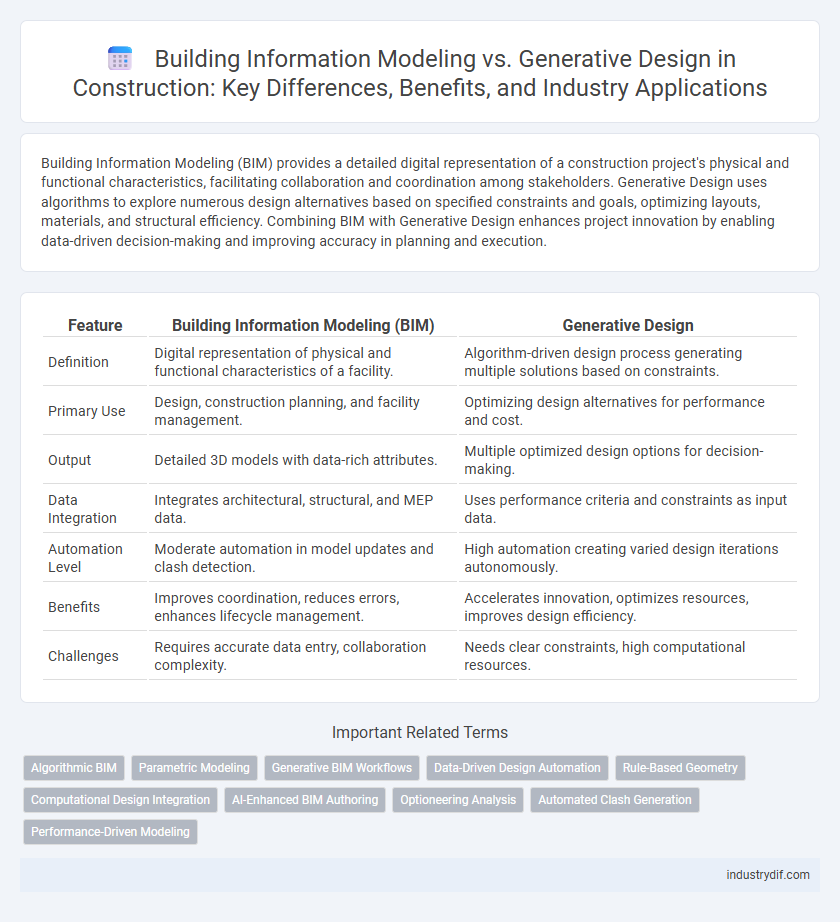
Table of Comparison
| Feature | Building Information Modeling (BIM) | Generative Design |
|---|---|---|
| Definition | Digital representation of physical and functional characteristics of a facility. | Algorithm-driven design process generating multiple solutions based on constraints. |
| Primary Use | Design, construction planning, and facility management. | Optimizing design alternatives for performance and cost. |
| Output | Detailed 3D models with data-rich attributes. | Multiple optimized design options for decision-making. |
| Data Integration | Integrates architectural, structural, and MEP data. | Uses performance criteria and constraints as input data. |
| Automation Level | Moderate automation in model updates and clash detection. | High automation creating varied design iterations autonomously. |
| Benefits | Improves coordination, reduces errors, enhances lifecycle management. | Accelerates innovation, optimizes resources, improves design efficiency. |
| Challenges | Requires accurate data entry, collaboration complexity. | Needs clear constraints, high computational resources. |
Introduction to Building Information Modeling (BIM)
Building Information Modeling (BIM) is a digital representation of the physical and functional characteristics of a construction project, enabling comprehensive data management throughout the project lifecycle. BIM integrates multidimensional models with detailed information on materials, timelines, and costs, enhancing collaboration among architects, engineers, and contractors. This data-driven approach improves accuracy in design, reduces errors, and streamlines construction processes compared to traditional methods.
Understanding Generative Design in Construction
Generative Design in construction leverages algorithms and BIM data to create multiple design alternatives optimized for performance, cost, and sustainability. This approach contrasts with traditional BIM, which primarily focuses on detailed 3D modeling and information management throughout the project lifecycle. By integrating generative design with BIM, construction teams can rapidly evaluate design options, improving efficiency and enabling data-driven decision-making.
Key Differences Between BIM and Generative Design
Building Information Modeling (BIM) focuses on creating detailed digital representations of physical and functional characteristics of buildings, enabling efficient project management and collaboration across disciplines. Generative Design uses algorithms and AI to explore multiple design options rapidly, optimizing building performance based on predefined goals and constraints. The key difference lies in BIM's emphasis on information management and documentation, while Generative Design prioritizes innovation and automated generation of design alternatives.
Core Benefits of BIM for Construction Projects
Building Information Modeling (BIM) enhances construction projects by providing precise 3D digital representations that improve coordination and reduce errors during design and construction phases. BIM enables real-time collaboration among architects, engineers, and contractors, leading to optimized scheduling, enhanced cost estimation, and better risk management. The integration of BIM supports lifecycle management, increasing efficiency from initial design through facility operation and maintenance.
Advantages of Generative Design in the Industry
Generative Design in construction enables rapid exploration of multiple design alternatives through algorithm-driven processes, significantly improving efficiency compared to traditional Building Information Modeling (BIM). It optimizes material usage and structural performance by integrating real-time data and performance objectives, reducing waste and enhancing sustainability. The technology facilitates innovative solutions and cost savings by automating complex problem-solving and accelerating decision-making in project development.
Integration of BIM and Generative Design Technologies
Integrating Building Information Modeling (BIM) with Generative Design technologies enhances project efficiency by automating design iterations while maintaining accurate digital representations of physical and functional characteristics. This synergy enables architects and engineers to optimize building performance, materials usage, and cost-effectiveness through real-time data-driven decision-making. The combined use of BIM and Generative Design accelerates workflows and fosters innovation in complex construction projects.
Real-World Applications: BIM vs. Generative Design
Building Information Modeling (BIM) excels in project visualization, coordination, and facility management by providing detailed digital representations of physical and functional characteristics, facilitating collaboration among architects, engineers, and contractors. Generative Design leverages algorithms and computational power to automatically generate optimized design options based on performance criteria, material constraints, and sustainability goals, significantly speeding up innovation in structural and architectural development. Real-world applications show BIM dominating construction documentation and lifecycle management, while Generative Design drives creativity in form-finding and efficient resource utilization during the early design phases.
Challenges Facing BIM and Generative Design Adoption
Building Information Modeling (BIM) adoption faces challenges such as high implementation costs, interoperability issues between different software platforms, and the need for specialized training to manage complex data effectively. Generative Design struggles with integrating seamlessly into existing workflows, the computational intensity required for processing multiple design iterations, and resistance from stakeholders due to unfamiliarity and perceived risk. Overcoming these obstacles requires investment in standardized protocols, advanced computational resources, and comprehensive education to enhance acceptance and efficiency in construction projects.
Future Trends: BIM and Generative Design in Construction
Building Information Modeling (BIM) and Generative Design are converging to revolutionize construction by enhancing project efficiency and sustainability through data-driven decision-making. Future trends indicate increased integration of BIM's detailed digital representations with Generative Design's algorithm-driven optimization, enabling architects and engineers to explore thousands of design alternatives rapidly while maintaining precise cost and resource estimates. This synergy supports smarter urban infrastructure development, reducing waste and accelerating project timelines in the evolving construction industry.
Choosing the Right Approach for Your Construction Project
Building Information Modeling (BIM) provides comprehensive data management and visualization tools essential for project coordination, while Generative Design leverages AI to rapidly generate optimized design alternatives based on specific constraints. Selecting BIM enhances collaboration and accuracy in documentation, making it ideal for large-scale projects requiring detailed planning and stakeholder integration. Generative Design suits innovative construction projects seeking creative solutions and efficiency improvements by exploring multiple design options quickly.
Related Important Terms
Algorithmic BIM
Algorithmic BIM leverages advanced computational algorithms to create dynamic, data-rich 3D models that enhance precision in construction planning and project management. Generative Design uses similar algorithms to explore numerous design alternatives rapidly, optimizing building performance and cost efficiency within the BIM environment.
Parametric Modeling
Building Information Modeling (BIM) integrates parametric modeling to create detailed, data-rich, and adaptable digital representations of physical structures, enhancing collaboration and accuracy in construction projects. In contrast, Generative Design leverages parametric algorithms to automatically generate multiple design alternatives based on specified constraints, optimizing building performance and efficiency.
Generative BIM Workflows
Generative BIM workflows integrate Building Information Modeling with algorithm-driven design processes to automate construction planning and optimize project outcomes through iterative simulations. This fusion enhances accuracy, reduces material waste, and accelerates decision-making by leveraging parametric data and real-time model updates.
Data-Driven Design Automation
Building Information Modeling (BIM) centralizes comprehensive project data to enhance collaboration and accuracy in construction workflows, while Generative Design leverages algorithms to automate innovative design solutions based on performance criteria. Combining BIM's structured data environment with Generative Design's automated optimization accelerates data-driven design automation, improving efficiency, reducing errors, and enabling adaptive, sustainable construction practices.
Rule-Based Geometry
Rule-based geometry in Building Information Modeling (BIM) automates the creation of detailed architectural components based on predefined standards, enabling precise and consistent design documentation. In contrast, generative design leverages algorithmic rules to explore multiple geometry variations, optimizing building performance and aesthetics beyond fixed constraints.
Computational Design Integration
Building Information Modeling (BIM) centralizes detailed architectural and structural data to streamline project collaboration, while Generative Design leverages algorithms to optimize design solutions based on performance criteria, with both technologies advancing computational design integration by enabling dynamic feedback loops and data-driven decision-making throughout construction workflows. Combining BIM's comprehensive digital representations with Generative Design's AI-driven exploration fosters enhanced efficiency, accuracy, and innovation in project delivery and resource management.
AI-Enhanced BIM Authoring
AI-enhanced Building Information Modeling (BIM) authoring integrates generative design algorithms to optimize architectural planning by automating iterative design alternatives based on project constraints and performance criteria. This fusion accelerates decision-making, reduces errors, and enhances collaboration across construction teams through intelligent data-driven insights and adaptive modeling.
Optioneering Analysis
Building Information Modeling (BIM) enhances Optioneering Analysis by providing detailed 3D digital representations and data integration, allowing precise evaluation of design alternatives. Generative Design leverages algorithmic processes and computational power to automatically generate and assess numerous design options, optimizing structural performance and resource efficiency within construction projects.
Automated Clash Generation
Building Information Modeling (BIM) enables automated clash detection by integrating detailed 3D models from multiple disciplines, identifying spatial conflicts early in the design phase to reduce costly on-site errors. Generative design complements this process by automatically producing optimized design alternatives that minimize clashes through algorithm-driven iterations, enhancing coordination and constructability.
Performance-Driven Modeling
Building Information Modeling (BIM) centralizes detailed digital representations of physical and functional characteristics in construction projects, enhancing coordination and data management; Generative Design leverages algorithm-driven processes to explore vast design options, optimizing for specific performance criteria such as energy efficiency and structural integrity. Performance-driven modeling integrates BIM's comprehensive data with generative algorithms to iteratively refine building designs, resulting in solutions that meet predefined performance targets while reducing material waste and construction costs.
Building Information Modeling vs Generative Design Infographic