industrydif.com
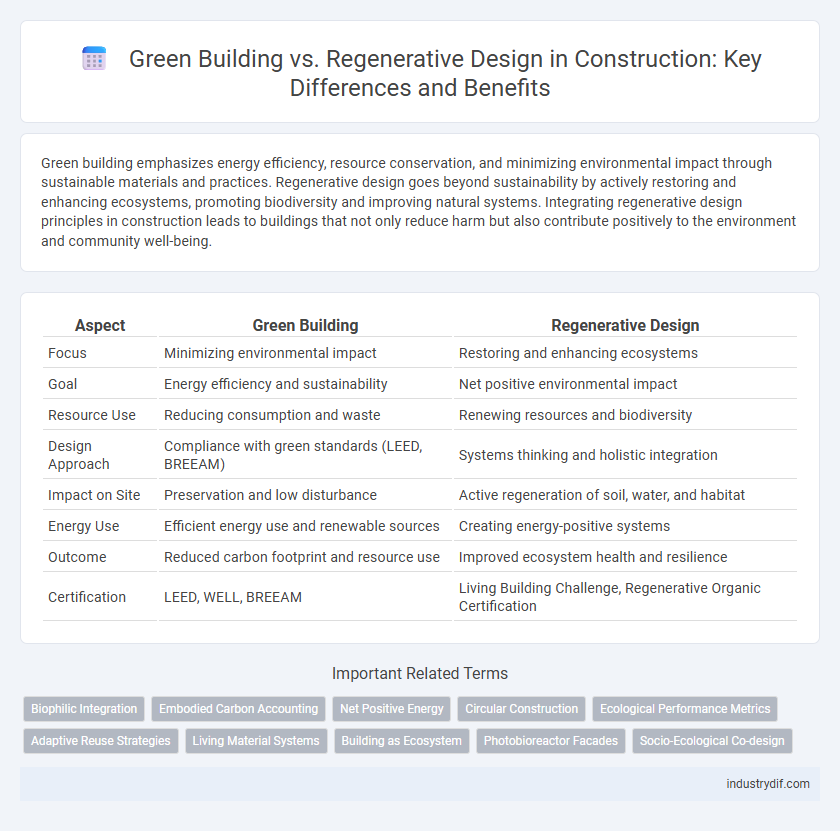
 Green building emphasizes energy efficiency, resource conservation, and minimizing environmental impact through sustainable materials and practices. Regenerative design goes beyond sustainability by actively restoring and enhancing ecosystems, promoting biodiversity and improving natural systems. Integrating regenerative design principles in construction leads to buildings that not only reduce harm but also contribute positively to the environment and community well-being.
Table of Comparison
| Aspect | Green Building | Regenerative Design |
|---|---|---|
| Focus | Minimizing environmental impact | Restoring and enhancing ecosystems |
| Goal | Energy efficiency and sustainability | Net positive environmental impact |
| Resource Use | Reducing consumption and waste | Renewing resources and biodiversity |
| Design Approach | Compliance with green standards (LEED, BREEAM) | Systems thinking and holistic integration |
| Impact on Site | Preservation and low disturbance | Active regeneration of soil, water, and habitat |
| Energy Use | Efficient energy use and renewable sources | Creating energy-positive systems |
| Outcome | Reduced carbon footprint and resource use | Improved ecosystem health and resilience |
| Certification | LEED, WELL, BREEAM | Living Building Challenge, Regenerative Organic Certification |
Defining Green Building and Regenerative Design
Green building prioritizes sustainable construction practices that minimize environmental impact through energy efficiency, resource conservation, and reduced waste. Regenerative design goes beyond sustainability by restoring and enhancing natural ecosystems, aiming to create buildings that contribute positively to the environment. Both approaches emphasize eco-friendly principles, but regenerative design integrates biomimicry and systems thinking to rejuvenate landscapes and improve biodiversity.
Key Principles of Green Building
Green Building emphasizes energy efficiency, water conservation, and the use of sustainable materials to minimize environmental impact throughout a building's lifecycle. It incorporates strategies such as passive solar design, high-performance insulation, and low-VOC materials to improve indoor air quality and reduce energy consumption. Key metrics include LEED certification, Energy Star ratings, and compliance with local green codes, ensuring buildings meet established sustainability standards.
Core Concepts of Regenerative Design
Regenerative design in construction emphasizes restoring and enhancing ecosystems through built environments that go beyond sustainability goals by actively improving natural systems. It integrates principles such as closed-loop material cycles, biodiversity support, and energy-positive operations to create buildings that contribute positively to their surroundings. Core concepts include biophilic design, holistic systems thinking, and adaptive resilience, ensuring structures not only minimize harm but generate environmental, social, and economic benefits over time.
Environmental Impact Comparison
Green building minimizes environmental impact through energy efficiency, waste reduction, and sustainable materials, achieving LEED certifications and lowering carbon footprints. Regenerative design goes beyond by restoring ecosystems, enhancing biodiversity, and improving soil health, aiming for net positive environmental contributions. While green building reduces harm, regenerative design actively improves natural systems, fostering a resilient built environment.
Materials and Resource Efficiency
Green Building emphasizes the use of sustainable materials and efficient resource management to minimize environmental impact, often incorporating recycled content and low-emission products. Regenerative Design goes beyond sustainability by creating systems that restore and enhance natural ecosystems through materials that are locally sourced, biodegradable, and promote biodiversity. Both approaches prioritize reducing waste and energy consumption, but regenerative design actively contributes to ecological renewal while maintaining high-performance standards in construction.
Energy Performance and Carbon Footprint
Green building emphasizes energy-efficient systems and materials to reduce operational energy use and lower the carbon footprint during a building's lifecycle. Regenerative design goes beyond minimizing impact by integrating renewable energy sources and natural processes that actively restore and improve the environment. Energy performance in regenerative design often achieves net-positive outcomes, significantly reducing carbon emissions compared to conventional green building strategies.
Role of Biodiversity in Construction
Green building practices prioritize minimizing environmental impact through energy efficiency and sustainable materials, while regenerative design actively restores and enhances biodiversity within construction sites. Integrating native plant species and creating habitats in building landscapes supports local ecosystems, promotes resilience, and improves air and water quality. Emphasizing biodiversity in construction fosters long-term ecological balance and contributes to the overall health and sustainability of urban environments.
Lifecycle Assessment Approaches
Green building incorporates lifecycle assessment (LCA) to minimize environmental impact by evaluating materials, energy use, and waste throughout a building's lifespan. Regenerative design extends beyond LCA by integrating systems thinking to restore and improve ecosystem health, emphasizing positive environmental contributions. Both approaches prioritize sustainability, but regenerative design advances lifecycle assessment with a focus on net-positive environmental outcomes.
Standards and Certification Systems
Green Building standards such as LEED and BREEAM emphasize energy efficiency, resource conservation, and indoor environmental quality through measurable criteria and certification tiers. Regenerative Design goes beyond by integrating systems thinking to restore natural ecosystems, supported by emerging certifications like the Living Building Challenge and WELL Building Standard that evaluate holistic ecological and human health impacts. The shift from conventional green certifications to regenerative standards reflects a growing industry commitment to achieving net-positive environmental outcomes and resilience in construction projects.
Future Trends in Sustainable Construction
Green Building emphasizes energy efficiency, reduced waste, and the use of sustainable materials to minimize environmental impact in construction. Regenerative Design advances this by actively restoring natural ecosystems, improving biodiversity, and enhancing community well-being through innovative building techniques. Future trends in sustainable construction prioritize regenerative practices, integrating smart technologies and circular economy principles to create buildings that contribute positively to their surrounding environment.
Related Important Terms
Biophilic Integration
Green building emphasizes energy efficiency and reduced environmental impact through sustainable materials and technologies, while regenerative design goes further by restoring and enhancing natural ecosystems within the built environment; biophilic integration in both approaches fosters occupant well-being by incorporating natural elements such as daylight, vegetation, and organic forms to strengthen the connection between people and nature. Incorporating biophilic design principles enhances indoor air quality, reduces stress, and increases productivity, making it a critical component in sustainable construction strategies that aim to create healthier, more resilient buildings.
Embodied Carbon Accounting
Green building emphasizes reducing embodied carbon through energy-efficient materials and construction methods, minimizing environmental impact during the building's lifecycle. Regenerative design goes further by incorporating materials and processes that actively restore ecosystems and sequester carbon, aiming for a net-positive environmental effect.
Net Positive Energy
Green building focuses on reducing energy consumption and environmental impact through efficiency and sustainable materials, while regenerative design aims to create net positive energy systems that produce more energy than they consume, enhancing ecosystem health and resource renewal. Net positive energy buildings integrate advanced renewable technologies such as solar panels and energy storage to achieve surplus energy production, setting new standards for sustainable construction.
Circular Construction
Green building emphasizes energy efficiency and reduced environmental impact through sustainable materials, while regenerative design aims to restore and improve ecosystems by integrating circular construction principles that promote material reuse and waste elimination. Circular construction supports regenerative design by closing resource loops, minimizing landfill waste, and enhancing building lifecycle sustainability.
Ecological Performance Metrics
Green building emphasizes energy efficiency, waste reduction, and water conservation using established ecological performance metrics like LEED and BREEAM certifications. Regenerative design advances these metrics by integrating restorative processes that enhance biodiversity, soil health, and ecosystem resilience over time.
Adaptive Reuse Strategies
Adaptive reuse strategies in green building emphasize conserving resources by repurposing existing structures to minimize environmental impact, while regenerative design goes further by restoring ecosystems and enhancing built environments through innovative materials and sustainable practices. Incorporating adaptive reuse within regenerative frameworks maximizes energy efficiency, reduces waste, and supports long-term ecological resilience in construction projects.
Living Material Systems
Green Building emphasizes energy efficiency and reduced environmental impact through sustainable materials, while Regenerative Design integrates Living Material Systems that actively restore ecosystems by using bio-based, self-sustaining components such as mycelium and algae. These living systems enhance building performance by improving air quality, sequestering carbon, and promoting biodiversity, surpassing conventional green construction methods.
Building as Ecosystem
Green building emphasizes reducing environmental impact through energy efficiency and sustainable materials, while regenerative design treats the building as a living ecosystem that enhances biodiversity, restores natural resources, and promotes symbiotic relationships between occupants and their environment. Integrating regenerative principles in construction fosters self-sustaining systems that go beyond sustainability by actively improving air quality, water cycles, and soil health within the built environment.
Photobioreactor Facades
Photobioreactor facades integrate microalgae cultivation within building envelopes, offering sustainable energy and carbon sequestration benefits that surpass traditional green building strategies. Unlike standard green buildings, regenerative design with photobioreactor facades actively restores environmental health by producing oxygen, reducing urban heat islands, and generating biofuels on-site.
Socio-Ecological Co-design
Green Building emphasizes reducing environmental impact through energy efficiency and sustainable materials, while Regenerative Design integrates socio-ecological co-design principles to restore ecosystems and enhance community well-being. Collaborative planning involving stakeholders ensures that built environments support biodiversity, social equity, and long-term ecological health.
Green Building vs Regenerative Design Infographic